Best Japanese Santoku Knives for Precision Cutting and Durability
July 30, 2025
On this page
Japanese Santoku knives are essential tools for chefs and home cooks alike, offering versatility in chopping, slicing, dicing, and mincing. With superior craftsmanship, these knives blend traditional Japanese forging techniques with modern materials, resulting in ultra-sharp, durable blades and ergonomic handles designed for comfort and control. Below is a comparison table of the best Japanese Santoku knives selected for their quality, design, and performance.
Some links in this article are affiliate links. If you buy through them, this site may earn a commission at no extra cost to you.
| Product Name | Blade Material | Blade Length | Handle Material |
|---|---|---|---|
| imarku Chef Knife 7 Inch Santoku Knife | 7Cr17Mov Japanese Stainless Steel | 7 inches | Ergonomic Handle |
| HOSHANHO 7 Inch Japanese Chef Knife | 10Cr15CoMoV Triple-Layer Laminated Steel | 7 inches | African Pakkawood |
| FAMCÜTE Santoku Knife 7 inch | 5 Layers 9CR18MOV High Carbon Steel | 7 inches | Rosewood |
| MITSUMOTO SAKARI 7 inch Santoku Knife | 3 Layers 9CR18MOV High Carbon Steel | 7 inches | Rosewood |
| imarku Santoku Knife Chef Knife 5 inch | German SUS440A High Carbon Stainless Steel | 5 inches | Ergonomic Pakkawood |
imarku Chef Knife 7 Inch Santoku Knife

This professional Santoku knife features a blade forged from premium 7Cr17Mov Japanese HC stainless steel, offering excellent resistance against rust, corrosion, and discoloration. Designed for multi-purpose kitchen use, it’s excellent for chopping, slicing, dicing, and mincing meats, vegetables, and fruits. The ultra-sharp edge is hand-polished at a precise 15-18 degrees per side, delivering enhanced durability and superior sharpness suitable for both home and restaurant environments. Its 2.5mm thick blade includes a hollow edge design, creating air pockets that reduce food sticking, facilitating smooth and efficient cutting.
HOSHANHO 7 Inch Japanese Chef Knife

Crafted from high-grade Japanese 10Cr15CoMoV steel in a triple-layer laminated construction, this Santoku knife boasts exceptional toughness and hardness up to 62HRC, making it highly resistant to heat, cold, and corrosion. Its blade utilizes a double-side groove design that reduces cutting resistance while preventing food from sticking. The 15-degree sharpened blade offers precise, thin cuts for a versatile kitchen tool able to tackle difficult tasks effortlessly. The ergonomic Pakkawood handle ensures a durable, comfortable grip and enhanced control, designed to withstand thermal expansion and daily usage.
FAMCÜTE Santoku Knife 7 inch

This Santoku features 5 layers of 9CR18MOV high carbon steel, forged with a blend of traditional craftsmanship and modern technology. Its blades undergo a strict 60-day production process including quenching, vacuum nitriding, and anti-rust oxidation, enhancing durability and edge retention. The knife achieves HRC 62 hardness, providing excellent corrosion and rust resistance for long-lasting sharpness without frequent honing. Equipped with a lightweight yet robust rosewood handle, the knife offers ergonomic comfort, reducing hand fatigue for extended use. It is an excellent choice for gift-giving to culinary enthusiasts showing detailed attention to quality.
MITSUMOTO SAKARI 7 inch Santoku Knife

Following traditional Japanese hand forging techniques, this Santoku combines a triple-layer 9CR18MOV high carbon steel blade with modern precision hardening and vacuum nitrogen cooling. The ultra-thin blade preserves optimum flavor and texture when cutting food, enhancing cooking results. The handle crafted from Southeast Asian summer sourwood offers an ergonomic octagonal design for balanced grip, reducing wrist tension and improving cutting flexibility. Packed in a sandalwood box, this knife reflects a perfect blend of craftsmanship and presentation suitable for professional and culinary gift purposes.
imarku Santoku Knife Chef Knife 5 inch
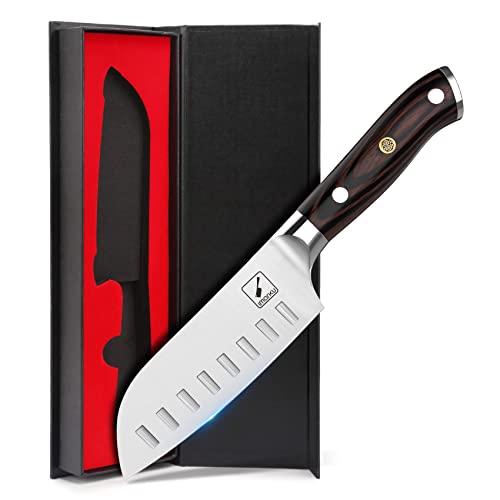
This 5-inch Santoku knife is constructed from German SUS440A high carbon stainless steel, designed to resist rust, corrosion, and discoloration. Its unique anti-stick blade design reduces cutting resistance and prevents food from adhering to the blade for an effortless chopping experience. The hand-polished edge is sharpened at 15-18 degrees per side, ensuring superior sharpness and durability. This shorter blade enhances maneuverability and cutting accuracy, ideal for detailed kitchen tasks requiring precision and control.
Buying Guide
When selecting the best Japanese Santoku knife, several factors impact performance and suitability:
- Blade Material: High carbon stainless steel such as 7Cr17Mov, 9CR18MOV, or VG10 offers durability, rust resistance, and maintains sharpness for prolonged use.
- Blade Hardness: Measured by HRC (Rockwell hardness), a rating between 58-62 offers a good balance of sharpness and edge retention.
- Blade Length and Thickness: Standard Santoku knives range from 5 to 7 inches. Longer blades provide versatility for bigger tasks, while shorter blades offer improved control and precision. Thickness influences stability and sharpness; thinner blades allow ultra-thin slicing.
- Edge Design: Hollow or scalloped edges reduce food sticking and improve slicing smoothness, while hand-polished edges provide precise sharpness.
- Handle Material and Ergonomics: Choose handles made from pakkawood, rosewood, or synthetic materials designed for comfort, grip security, and durability. Ergonomic and octagonal shapes minimize wrist fatigue and enhance control.
- Forging Technique: Traditional hand forging improves blade strength and sharpness. Look for knives combining heritage techniques with modern technology for optimal results.
- Maintenance and Sharpening: Consider ease of sharpening and recommended maintenance. High-quality steel knives typically require professional honing but retain edge longer.
Overall, balance performance, comfort, and craftsmanship to find a Japanese Santoku knife that best suits your culinary needs and preferences.