The Damascus Santoku knife is a versatile kitchen essential known for its sharpness, durability, and aesthetic appeal. Crafted with layered steel and advanced forging techniques, these knives combine traditional craftsmanship with modern technology. Below is a summary table featuring some of the top-rated Damascus Santoku knives available, followed by detailed reviews to help you find the perfect blade for home or professional use.
| Knife | Blade Length | Blade Material | Handle Material |
|---|---|---|---|
| HOSHANHO Damascus Santoku Knife | 7 Inch | 67 Layers Damascus Steel with Japanese 10Cr15CoMoV core | Ergonomic G10 |
| KYOKU Santoku Knife – 7″ Shogun Series | 7 Inch | Japanese VG10 Damascus Steel Core | Military Grade G10 |
| FINTISO 7-Inch Kitchen Knife | 7 Inch | 67-Layer Japanese Damascus Steel | Durable G10 with Blue Line |
| Home Hero Japanese Santoku Knife Collection | 5 Inch | VG10 Damascus Steel | Ergonomic Rosewood |
| SHAN ZU 7 Inch Damascus Santoku Knife | 7 Inch | 67 Layer 10Cr15Mov Damascus Japanese Steel | Fiberglass G10 |
HOSHANHO 7-Inch Damascus Santoku Knife

The HOSHANHO Damascus Santoku Knife features a blade constructed from 67 layers of Damascus steel, crafted around a high-quality Japanese 10Cr15CoMoV steel core. It undergoes vacuum heat treatment and liquid nitrogen cryogenic treatment to ensure extraordinary toughness and durability. The blade hardness rates between 62-64HRC, making it capable of cutting meat and vegetables with ease.
Its ultra-sharp edge has a carefully hand-polished angle between 12-15 degrees per side, enhancing cutting efficiency. The double-sided hollow blade design minimizes sticking and friction while slicing. The handle is made with ergonomic G10 glass fiber, offering both heat insulation and comfortable balance, perfect for prolonged kitchen use without fatigue.
KYOKU 7″ Shogun Series VG-10 Damascus Santoku Knife
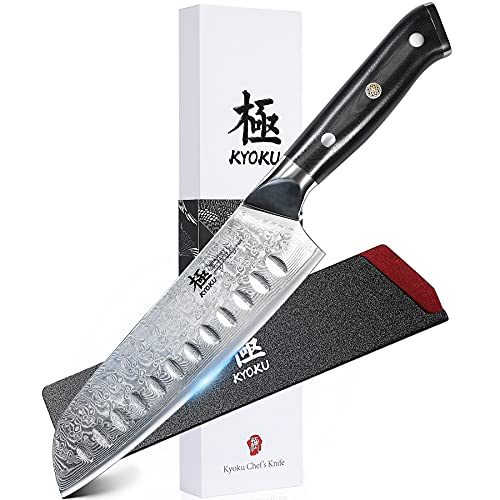
Manufactured with a VG-10 Japanese Damascus steel core, the KYOKU Santoku Knife features an ultra-sharp blade with hardness of 58-60 HRC. The cobalt alloy addition increases durability and edge retention while also ensuring ease of sharpening.
The 7-inch blade is wider and slightly curved, sharpened on both sides for western-style versatility. It is designed for balance and comfort to reduce hand fatigue during extended use. The handle made from military-grade G10 resin is highly resistant to heat, moisture, and cold, ensuring long-term resilience.
FINTISO 7-Inch Japanese Damascus Santoku Knife

The FINTISO Santoku Knife stands out with its stylish black Damascus pattern achieved through a special forging process, enhancing both texture and visual appeal. The 7-inch blade is forged with 67 layers of Japanese Damascus steel, providing excellent cutting performance and durability.
Its handle made from rugged G10 material features a unique blue line running through it, combining fashion with function. The ergonomic design offers excellent grip and balance, making the knife practical for cutting both meat and vegetables with control and ease.
Home Hero Japanese Santoku Knife with Rosewood Handle

This 5-inch Home Hero Santoku Knife delivers precision with VG10 Damascus steel that is triple-riveted for stability. It is designed for versatile use, cutting meat, fish, and vegetables with remarkable ease.
The ergonomic rosewood handle provides a classic yet comfortable grip, promoting accuracy and control. This knife is suited for cooks seeking a smaller, finely crafted Santoku for delicate chopping and slicing tasks.
SHAN ZU 7-Inch Damascus Steel Santoku Knife

The SHAN ZU Santoku Knife boasts 67 layers of 10Cr15Mov Damascus Japanese steel, resulting in a rust-resistant, wear-resistant, and extremely sharp blade with hardness at 62 HRC. This real Damascus knife is created through traditional folding and forging techniques rather than laser etching.
The ergonomic handle is crafted from fiberglass G10, providing a durable, comfortable grip. Its combination of traditional craftsmanship and modern materials makes it a reliable tool for both professional and home kitchens.
Buying Guide for Damascus Santoku Knives
When choosing a Damascus Santoku knife, several factors must be considered to ensure you select a blade tailored to your needs:
Blade Material and Construction
The number of layers and steel type affects blade performance significantly. Look for knives forged with at least 33 layers of Damascus steel around a high-carbon Japanese core like VG10, 10Cr15CoMoV, or AUS-10 for superior hardness, sharpness, and rust resistance.
Blade Length and Design
Santoku knives typically range from 5 to 7 inches in blade length. Choose according to your cutting tasks; shorter blades offer precision for smaller ingredients, while longer blades allow more versatility and broader slicing.
Edge Sharpness and Angle
Damascus Santoku knives usually have a sharp cutting angle between 12° and 15°, which balances sharpness with durability. A double-beveled edge suits western and eastern cooking styles, promoting smooth cuts for slicing, dicing, and chopping.
Handle Material and Comfort
ergonomic handles in materials such as G10, Pakkawood, or rosewood provide comfortable grips and durability. Handles that are resistant to moisture, heat, and cold prevent slippage and fatigue during prolonged use.
Weight and Balance
A well-balanced Santoku knife feels comfortable in hand, reducing strain. Consider knives designed to distribute weight evenly, especially if you cook frequently or for extended periods.
Maintenance and Care
Damascus knives require proper care: hand wash only, avoid dishwashers, and sharpen regularly to maintain edge quality. Some models recommend frequent honing to keep the blade performing at its best.
Reviewing these purchase considerations will help ensure that your Damascus Santoku knife is a long-lasting, high-performing kitchen companion.